


Ultimate Guide to Cleaning Pet Stains from High Traffic Carpets and Keeping Them Fresh
A pet stain on a quiet guest room carpet is annoying. A pet stain on the hallway, living room path, or favorite rug by the back door is a whole different problem. High-traffic carpet gets walked on, squashed down, re-soiled, and warmed by daily life, which can push stains deeper and make odors linger.
The good news is that most pet stains can be handled at home if you act quickly, use the right cleaner, and avoid the few mistakes that make stains worse. This guide covers the best methods for fresh and old stains, what products actually help, and how to keep busy carpets fresher between deep cleans.
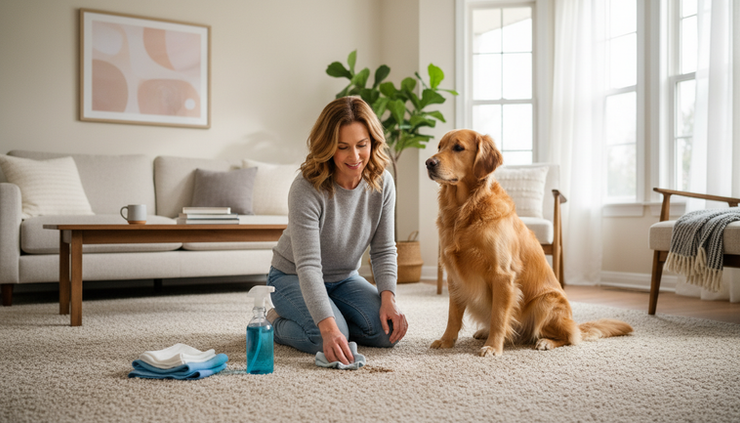
Why pet stains are harder on high-traffic carpet
High-traffic areas take more abuse than the rest of the floor. Shoes, paws, furniture paths, and daily foot traffic grind residue into the carpet fibers. If a pet has an accident in one of these zones, the stain can spread below the surface before you notice it.
Pet stains also vary. Urine needs a different approach than mud. Vomit and feces need careful removal before any liquid cleaner goes down. Hairball stains can contain dyes from food. Even drool can leave a grayish mark when mixed with dirt already sitting in the carpet.
A neighbor once told me she kept cleaning the same hallway spot every few days because her senior dog had accidents there. The carpet looked fine when wet, then the stain came back after it dried. The issue was not that she was doing nothing. She was using a scented all-purpose cleaner that masked the smell but never broke down the source. Once she switched to an enzyme cleaner and slowed down the process, the stain stopped returning.
That is the key lesson: clean the material, not just the mark you see on top.
Build a pet stain cleaning kit before you need it
A good stain kit does not need to be expensive or fancy. Keep these items in a bin or cabinet so you can act fast.
White cotton towels or microfiber cloths
Paper towels for solids and first-pass blotting
Disposable gloves
A spoon, dull knife, or pet waste scoop
Enzymatic pet stain cleaner
Mild dish soap
Baking soda
3% hydrogen peroxide
White vinegar
Spray bottle
Soft-bristle brush
Wet-dry vacuum or portable carpet extractor
Black light flashlight for hidden urine spots
The most important product is an enzymatic cleaner made for pet stains. Enzymes help break down organic material in urine, feces, vomit, and other pet messes. Regular carpet shampoo may make the carpet smell pleasant for a while, but enzyme cleaners target the residue that attracts pets back to the same spot.
Before using any cleaner, test it in a hidden area. Some carpets, especially wool or brightly dyed rugs, can react badly to vinegar, peroxide, oxygen cleaners, or strong alkaline products.
Start with the right first move
The first five minutes matter. The goal is to lift as much of the mess as possible without spreading it or driving it deeper.
Pick up solids first.
Use gloves and a spoon or dull scraper. Work gently from the outside toward the center.
Blot, do not scrub.
Press a clean towel into the stain. Replace the towel as it absorbs moisture. Scrubbing can fray carpet fibers and smear the stain.
Use cool water for the first rinse.
Hot water can set some protein-based stains, especially vomit or feces. Lightly dampen, blot, then repeat.
Apply the right cleaner.
Match your cleaner to the stain type. More product is not always better.
Give it contact time.
Enzyme cleaners need time to work. Follow the label, and keep the area slightly damp during the recommended dwell time.
Dry the area fully.
Use towels, airflow, or a fan. Damp carpet attracts dirt and can develop a musty smell.
A small habit helps here: stand on a folded towel after treating the spot. Your body weight pulls more moisture from the padding than hand blotting alone.

Match the cleaning method to the stain
Different pet stains need different treatments. Use this quick guide before you reach for the nearest spray bottle.
Stain type | Best first step | Best cleaner | Avoid |
Fresh urine | Blot until nearly dry | Enzymatic pet urine cleaner | Steam or heat before treating |
Old urine | Locate with black light, rinse lightly | Enzymatic cleaner with long dwell time | Perfumed cleaners that mask odor |
Feces | Remove solids, blot gently | Enzyme cleaner, then mild soap if needed | Scrubbing into fibers |
Vomit | Remove solids, rinse with cool water | Enzyme cleaner or oxygen cleaner if carpet-safe | Hot water at the start |
Muddy paws | Let heavy mud dry, vacuum first | Mild dish soap solution | Wet scrubbing wet mud |
Drool or body oil | Blot and loosen residue | Mild soap, then rinse well | Leaving soap in carpet |
Hairball stains | Remove solids, cool rinse | Enzyme cleaner, oxygen cleaner if safe | Strong bleach products |
Fresh urine needs enzyme cleaner and patience
Fresh urine is easier to remove than old urine, but only if you treat the source. Blot first. If you have a portable extractor, use plain cool water to rinse and extract once or twice. Then saturate the stained area with enzymatic cleaner according to the label.
Make sure the cleaner reaches the same depth as the urine. If the accident soaked through to the pad, a light surface spray will not be enough. After the enzyme cleaner sits for the recommended time, blot and dry.
Do not use ammonia-based cleaners. Urine contains ammonia-like compounds, and that scent may encourage repeat marking.
Old urine needs a slower approach
Old urine can be stubborn because crystals and residue dry inside the carpet and padding. A black light can help you find the full stain pattern, though not every spot will glow clearly.
Lightly rinse the area with cool water, extract or blot, then apply enzymatic cleaner. Cover the damp area with plastic wrap for several hours if the product label allows it. This slows evaporation and gives the enzymes more time to work.
For severe old stains, one treatment may not fix everything. Repeat after the carpet dries. If odor remains after several attempts, the pad may need professional cleaning or replacement.
Feces and diarrhea stains need gentle removal
Pick up solids first. For loose messes, use paper towels to lift without pressing down. Once solids are gone, blot with cool water. Apply an enzyme cleaner and let it sit.
If a faint mark remains, mix a few drops of mild dish soap with a cup of cool water. Dab the area, then rinse with plain water. Soap residue attracts dirt, so do not skip the rinse.
Vomit and hairball stains need cool water first
Vomit and hairballs often contain stomach acid, food dyes, and partially digested food. Remove solids, then rinse with cool water. Treat with an enzyme cleaner.
If a color stain remains and your carpet is not wool or silk, a carpet-safe oxygen cleaner may help. Test first. Hydrogen peroxide can also lighten some stains, but it can lighten carpet dye too. Use it only after a hidden spot test.
Muddy paw prints should dry before vacuuming
This feels backward, but wet mud often spreads. If the mud is thick, let it dry. Vacuum slowly, using several passes. Then spot clean what remains with a mild dish soap solution.
This trick saved a cream hallway runner in a home with two large dogs and a rainy backyard. The family used to attack muddy prints while wet, which created brown smears. Once they started drying, vacuuming, then spot cleaning, the runner looked better and took far less time to clean.
Use a high-traffic cleaning routine that actually works
High-traffic carpet needs spot cleaning and regular upkeep. Pet owners often wait until the carpet smells bad, but by then dirt and oils have built up in layers.
Use this routine for busy carpet lanes:
Vacuum high-traffic areas three to four times per week.
Vacuum slowly so the machine can lift hair, dander, and grit.
Treat stains as soon as possible.
Rinse cleaner residue after spot cleaning.
Use a portable extractor for recurring pet zones.
Deep clean carpet every few months, or more often if pets have frequent accidents.
The slow vacuuming part matters. A fast pass picks up surface crumbs, but it misses embedded grit. That grit acts like sandpaper and makes traffic lanes look dull.
If you use a carpet shampooer, choose a pet-safe machine formula and avoid over-wetting. Too much water can soak the pad and create odor. Make extra dry passes with the machine, then run fans until the carpet feels completely dry.

Know which products help and when to skip them
Not every popular cleaning product belongs on carpet. Some help in the right situation. Others create bigger problems.
Enzymatic cleaners
Use these for urine, feces, vomit, and organic pet odors. They work best when the area stays damp long enough for the enzymes to break down residue. Choose a product labeled for carpets and pet stains.
Baking soda
Baking soda can absorb odor after the stain has been cleaned and dried. Sprinkle a light layer, let it sit, then vacuum thoroughly. Do not pour baking soda onto a wet stain in thick piles. It can form a paste that is hard to remove.
White vinegar
Vinegar can help neutralize some odors and loosen residue, but it is not the best answer for every pet stain. It may also affect certain carpet fibers or dyes. Never mix vinegar with bleach.
Hydrogen peroxide
A 3% hydrogen peroxide solution can help with discoloration on some synthetic carpets. Test first. Apply lightly, blot, and rinse. Do not use it on dark carpet without testing because it may cause light spots.
Dish soap
Mild dish soap helps with oily drool, tracked-in grime, and some food-based stains. Use only a few drops in water. Too much soap leaves a sticky film.
Oxygen-based carpet cleaners
These can help with color stains from vomit, feces, or pet food. Check the carpet care label. Avoid them on delicate natural fibers unless the manufacturer says they are safe.
Steam cleaners
Steam can be useful after stains are fully treated, but avoid using heat on fresh urine, vomit, or feces stains before enzyme treatment. Heat can make some stains and smells harder to remove.
Prevent repeat stains before they become a habit
Cleaning matters, but prevention keeps high-traffic carpets livable. Pets return to places that smell familiar, even if people cannot detect the odor.
Start with these steps:
Place washable mats at doors and near litter boxes.
Keep a towel by the entry for wet paws.
Use runners in hallway paths and favorite pet routes.
Groom pets regularly to reduce hair, dander, and body oils.
Clean litter boxes often.
Take dogs out on a predictable schedule.
Block access to recently cleaned stains until fully dry.
Wash pet beds and blankets often.
If a house-trained pet suddenly starts having accidents, call a veterinarian. Urinary issues, digestive upset, pain, stress, aging, and mobility problems can all change bathroom habits. Cleaning the carpet helps, but the pattern may continue if the cause goes untreated.
For senior pets, washable rugs and waterproof rug pads can make life easier. They protect the carpet without making the home feel covered in plastic. Keep one extra washable runner on hand so you can swap it in after an accident.
Keep carpet smelling fresh between deep cleans
A fresh carpet is not just stain-free. It also smells clean without heavy perfume. Strong fragrances may cover odor for a day, but they do not remove the source.
Try this simple maintenance plan:
Every day
Pick up pet toys, check common accident areas, and wipe muddy paws at the door.
A few times a week
Vacuum traffic lanes, pet beds, and the edges of rooms where hair collects.
Once a week
Wash pet blankets and shake out washable rugs. Check for hidden stains near furniture legs, doorways, and corners.
Once a month
Use a black light in problem areas. Clean small spots before they turn into large odor zones.
Seasonally
Deep clean high-traffic carpet with a rental machine, home extractor, or professional service. Use fans and open windows when possible so the carpet dries quickly.
A family with two cats once shared that their living room always smelled faintly “off” even after vacuuming. The carpet was not the main issue at first. The throw blanket on the sofa and the rug near the litter box held most of the odor. Once those went into a weekly wash rotation, the carpet stayed fresher because less odor and dander transferred back onto it.

Common mistakes that make pet stains worse
Even careful pet owners make these mistakes because they seem logical in the moment.
Scrubbing hard
This damages fibers and spreads the stain. Blot instead.
Using too much cleaner
More cleaner can leave more residue. Residue attracts dirt and makes the spot darken again.
Skipping the rinse
Soap and some carpet sprays need a light rinse. Plain water and blotting often make the difference.
Covering odor with fragrance
Perfume does not remove urine crystals or organic residue. Use enzyme cleaners for the source.
Over-wetting the carpet
Too much liquid can reach the pad and subfloor. Use enough product to treat the stain, then extract or blot well.
Letting pets back too soon
Pets may remark a damp spot. Keep them away until the carpet is fully dry.
When to call a professional
Some stains go beyond normal home cleaning. Call a carpet cleaning professional if:
The odor returns after several enzyme treatments.
The stain covers a large area.
Urine reached the carpet pad.
The carpet is wool, silk, or a delicate specialty rug.
You see dark staining around the subfloor or baseboards.
A pet repeatedly marks the same area.
Professionals can use stronger extraction equipment and specialty treatments. In severe urine cases, they may need to lift the carpet, replace padding, or seal the subfloor. That sounds dramatic, but it is sometimes the only way to fully remove odor.
A simple plan for cleaner carpets and happier pets
Pet stains are part of life with animals, especially on carpets that handle daily traffic. The best approach is simple: blot fast, choose the right cleaner, give enzyme products enough time, rinse residue, and dry the carpet well.
Then build habits that prevent the next stain from becoming a project. Vacuum slowly. Protect traffic lanes. Wash pet bedding. Keep a stain kit ready. Most of all, treat repeat accidents as information, not failure. Sometimes the carpet needs a better cleaner. Sometimes a pet needs a schedule change, a cleaner litter box, or a vet visit.
With the right routine, high-traffic carpet can survive muddy paws, senior pet accidents, hairballs, and everyday messes while still feeling fresh underfoot.


Comments